
Competitive Exams
Competitive Exams
 LLB is the most common degree of law education. The LLB takes the 3 year as the duration
of the course. One who wishes to do the integrated course can take the admission in 5 year
integrated programme after the completion of 10+2 exams. There are various law entrance exams.
LLB is the most common degree of law education. The LLB takes the 3 year as the duration
of the course. One who wishes to do the integrated course can take the admission in 5 year
integrated programme after the completion of 10+2 exams. There are various law entrance exams.
Toppers
- MH CET LAW- 3 & 5 years
MH CET Law or Maharashtra Common Entrance Test for Law is a national level exam conducted by the Directorate of Higher Education, Maharashtra for admissions to law courses offered at the law colleges of the state.
- 3 Years LLB
- Educational qualification: Graduation in any discipline
- Minimum marks required in qualifying exam
- General, EWS or Orphan candidates - 45%
- SC and ST of Maharashtra - 40%
- No Age Limit
- 5 Years LLB
- Educational qualification- Class 12th or any equivalent from a recognised board or institute.
- Minimum marks required in qualifying exam
- General, EWS or Orphan candidates - 45%
- SC and ST of Maharashtra - 40%
- No Age Limit
- 3 Years LLB
- CLAT- UG & PG
Common Law Admission Test (CLAT) is a centralized national level entrance test for admissions to twenty two National Law Universities (NLU) in India.[1] Most private and self-financed law schools in India also use these scores for law admissions.
- CLAT Eligibility for UG Course (LL.B.)
As per the revised standards, there will be no upper age limit for UG Program in CLAT 2021.
- CLAT Eligibility
- Academic Qualification - A candidate must have secured minimum marks required in 12th standard, as per the category to which he/she belongs: For Unreserved /OBC /Specially Abled Persons (SAP) and other categories – A minimum of 45% marks required. For SC/ST Category – A minimum of 40% marks required.
- CLAT Eligibility
- CLAT Eligibility for PG Course (LL.M.)
CLAT offers admissions to both national and NRI candidates in the One Year LLM Course offered at various NLUs and other institutes/ universities accepting CLAT Scores.
- CLAT Age Limit
- There is no upper age limit set for appearing in the examination.
- CLAT Eligibility
- Academic Qualification – Aspirants appearing for CLAT LLM Program should have secured a minimum percentage in qualifying examination (i.e. LL.B./ 5-Year Integrated LL.B. (Hons.)/ any other equivalent exam). The marks vary as per candidate’s category. For Unreserved /OBC /Specially Abled Persons (SAP) and other categories: a minimum of 50% marks are required. For SC/ ST category – a minimum of 45% marks is required. On the date of admission, he/ she must have passed or appeared in the final semester/final year examination of the qualifying examination. Submit the final result of the qualifying examination within the time frame prescribed by the respective University/Institute. Till then such candidates are given provisional admission.
- CLAT Age Limit
- CLAT Eligibility for UG Course (LL.B.)
- AILET- 3 & 5 Years
All India Law Entrance Test (AILET) is conducted by National Law University Delhi (NLU Delhi) every year to offer admission to eligible candidates in undergraduate (UG), postgraduate (PG), and doctorate (PhD) level law courses. This is a university-level entrance exam only for admission in law programmes at NLU Delhi. The university does not accept any other law entrance exam for NLU Delhi admissions.
- UG Law course
- Candidates passed in Class 12th or SSC examination or equivalent with minimum 50% marks.
- Candidates appearing for the qualifying exams are also eligible.
- PG Law course
- Candidates holding LLB or an equivalent degree with minimum 55% marks are eligible.
- Candidates belonging to SC/ ST categories need to secure at least 50% marks in the final year of the LLB degree.
- Candidates appearing for their final year LLB examinations are also eligible.
- UG Law course
- NPAT- All private colleges
NMIMS Programs After Twelfth or NPAT 2021 is an entrance exam conducted by SVKM’s NMIMS. It is held to shortlist candidates for admission to courses such as BBA, BTech, BSc, BCom, BDes, MBA (Technology), B.A (Hons) Liberal Arts and other integrated courses. Different campuses of NMIMS situated at Mumbai, Shirpur, Bengaluru, Hyderabad, Navi Mumbai, Indore and Dhule provide a range of Undergraduate and Postgraduate programmes.
Candidates who wish to appear for NPAT 2021 must fulfill the eligibility criteria for the NPAT exam. If candidates fail to meet eligibility criteria, the application forms will be rejected by the officials. Below are the eligibility criteria for NPAT as prescribed by Narsee Monjee Institute of Management Studies (NMIMS).
- NMIMS- NPAT Eligibility Criteria
- Candidates applying for NPAT exam must have completed Class 12 or equivalent examination (inclusive of International Baccalaureate (IB) Diploma in any stream)
- Candidates can submit an IB diploma only if it is awarded by a recognised board. IB certificate holders are not eligible for the test.
- Candidates who have passed their 10+2 or equivalent examination from Open or Distance Learning (ODL) are also eligible to apply for the exam. In this case, the school should be recognised by National Institute of Open Schooling (NIOS).
- Candidates who have not been able to clear 10+2 either from CBSE or ICSE board or IB diploma in their first attempt are not eligible for NPAT exam
- Candidates must have obtained an aggregate of 60% in 10+2 or equivalent examination
- Candidates holding IB Diploma will be eligible only if he/she has Mathematics/ Statistics at the standard level
- Candidates having cleared either CBSE/ ICSE board exam need to mention the aggregate marks of all the subjects of Class 10 or equivalent examination. The marks of best of four or five subjects will not be considered.
- Candidates exceeding the age of 25 years are not eligible to apply for the exam
- NMIMS- NPAT Eligibility Criteria
- SLAT- Symbiosis college
Symbiosis Law Admission Test (SLAT) is an entrance exam conducted by the Symbiosis International (Deemed) University (SIU) to offer admissions in the five-year integrated law courses i.e. BA LLB (Hons.) and BBA LLB (Hons.). The law courses are offered at four law schools of SIU i.e. Symbiosis Law School (SLS) Pune, SLS Noida, SLS Hyderabad, and SLS Nagpur.
- SLAT 2021 Eligibility Criteria
- Candidates who have cleared the Class 12 qualifying examination from any national or state board of education are eligible to apply for SLAT 2021. The detailed eligibility criteria for SLAT 2021 is mentioned below:
- Minimum marks required to qualify the examination is 45% (40% for SC/ ST category students)
- SLAT 2021 Eligibility Criteria
 Owing to the security and stability associated with bank jobs, many find banking as a
lucrative career.
We take the following
Owing to the security and stability associated with bank jobs, many find banking as a
lucrative career.
We take the following
Toppers
- RBI
RBI (Reserve Bank of India) is the bank to the Indian Government. Working for the bank means that you are directly in the service of the nation. Being associated with the bank is thus a matter of great prestige. You can appear for exams for the following positions to work with the RBI -
- RBI Grade B Officer
The Grade B officer is an entry-level manager in the Reserve Bank of India (RBI). The Grade B Officer exam consists of 3 stages – A preliminary examination, a mains and a personal interview. They check your general awareness, quantitative aptitude, reasoning ability and English language skills in the prelims. The mains features questions based on economic and social issues, English language, finance and management, economics and statistics. The personal interview consists of questions on General Awareness and interpersonal skills.
- Eligibility
- Between 21 and 30 years of age and with a minimum bachelor’s degree can apply for the posts.
- Eligibility
- RBI Assistant
The RBI Assistant is responsible for data entry and other day-to-day operations of the bank. This exam consists of preliminary and mains level, both of which have to be cleared to reach the final level- the language proficiency test. The preliminary exam consists of reasoning ability, numerical ability, and the English language. The Mains exam includes reasoning ability, English language tests, quantitative aptitude, general awareness and computer knowledge. Upon qualifying the mains exam, candidates have to appear for a language proficiency test which is conducted in the official language of the concerned state
- Eligibility
- Candidates with 50% marks in their graduation in any discipline and up to 28 years of age, can apply for the posts.
- Eligibility
- RBI Grade B Officer
- SBI
Although SBI is a public bank, it recruits personnel through its exam instead of IBPS. SBI careers are highly coveted, given the bank’s reputation. You can appear for the following SBI bank exams:
- SBI PO
The SBI PO is responsible for the bank administration, supervision of clerical work and furthering the business interests of the bank. The SBI PO exams consist of preliminary, mains and an interview.
The preliminary exam consists of tests on the English language, numerical ability and reasoning. The mains exam has two sections: objective and descriptive. The objective section covers reasoning & computer aptitude, data analysis & interpretation, general/economy awareness and English language. The descriptive section includes letter and essay writing.
After clearing the mains exams, a candidate must clear a group exercise and interview to make it to the merit list. The final merit list is based on the aggregate score of mains exam and group exercise/interview.
- Eligibility
- Anyone with a minimum bachelor’s degree is eligible to apply for the posts.
- Eligibility
- SBI Clerk
The SBI clerk is involved in data entry and direct interaction with the customers of the bank.
Similar to the SBI PO exams, the clerk exam will have preliminary, mains and an interview. The preliminary exam will test your English skills, numerical ability and reasoning. The mains exams cover reasoning & computer aptitude, data analysis & interpretation, general/economy awareness and English language in the objective section and letter and essay writing skills in the descriptive section.
- Eligibility
- Minimum education qualification for SBI clerk is graduation.
- Eligibility
- SBI PO
- IDBI
The IDBI career is quite appealing, thanks to the perks associated with working for a government bank. For a career in IDBI bank, aspirants can apply for Specialist Cadre Officer in different functional areas.
The exam involves two stages: online test and interview. The online test consists of reasoning, English language, quantitative aptitude, general/banking awareness and stream-specific questions. One must clear all the stages to qualify for the interview in the final stage.
These bank exams see Lakhs of aspirants every year. However, owing to limited posts for bank jobs, there is fierce competition to make it to the final list. Hence, there are chances that you might not make the cut. You need not worry even if you don't; because NIIT offers a range of programs- from short term banking courses like Tally Accounting and Introduction to GST to full-fledged banking courses after graduation like PG Diploma in Sales & Banking and the ANIIT course.
Contact your nearest centre to know more about these programs. !Our counsellors will also help you in understanding which course is perfect for you.
- Eligibility
- Candidates between 20 and 25 years of age and with 60% marks in graduation can apply for the posts.
- Eligibility
- NABARD
NABARD conducts examinations for an assistant manager (grade ‘A’ officer) consisting of preliminary, mains and an interview. The preliminary exam consists of the following tests- quantitative aptitude, reasoning, English language, computer aptitude, general awareness, economic and social issues, agriculture and rural development. The candidates who clear the prelims are eligible for the Mains
The paper for the mains covers descriptive writing skills in English, economic and social issues along with agriculture and rural development for general posts and agriculture issues for candidates applying for manager agriculture post, and legal services: proficiency in interpreting various laws viz., banking, company, industrial and cooperative laws, cyber laws, commerce/property transactions, rural non-life insurance, direct financing, staff matters etc.
The final stage is the interview process, and the merit list for the NABARD Recruitment is prepared by aggregating the score in the mains and interview phases.
- Eligibility
- Eligibility and selection process are different for different groups.
- Eligibility
- IBPS
The IBPS (Institute of Banking Personnel Selection) is an autonomous body that conducts recruitment examinations for all public sector banks in India. The exams are conducted for various posts and profiles as follows:
- IBPS PO
The IBPS PO (Probationary Officer) is responsible for the business of the bank, supervision of the clerks and business development. The IBPS exam for the post of the Probationary Officer is conducted in three stagespreliminary, mains and interview. A candidate must clear all three to get selected.
The preliminary exam includes the English language, a numerical ability test and reasoning. The IBPS mains exams test your reasoning, computer aptitude, English skills, data analysis and interpretation and general/economy awareness.
- Eligibility
- Graduates in any discipline can apply for the posts
- Eligibility
- IBPS Clerk
An IBPS Clerk is responsible for data entry and other clerical works that come up in the bank.
The IBPS exam for clerk is also conducted in three phases of preliminary, mains and interview. Similar to the PO exam, the preliminary exam consists of English language, numerical ability and reasoning tests. The mains exam includes reasoning and computer aptitude, English skills, data analysis and interpretation and general/economy awareness tests.
A candidate must secure a minimum cut-off to get selected at his/her choice of bank
- Eligibility
- Graduates in any discipline can apply for the posts
- Eligibility
- IBPS RRB
IBPS holds Common Recruitment Process (CRP) for different RRBs for recruitment of Group A - Officers (Scale I, II & III) and Group B - Office Assistant (Multipurpose). Minimum educational qualification for the posts is graduation, but it varies with the posts. IBPS RRB Online exam is conducted every year separately for different posts. For Officers Scale II & III, there will be only one exam. For Officer Scale I and Office Assistant, preliminary, mains and interview are conducted.
- Eligibility
- Minimum educational qualification for the posts is graduation, but it varies with the posts.
- Eligibility
- IBPS SO
IBPS conducts recruitment for Specialist officers (SO) for different categories such as IT Officer (Scale I), Agricultural Field Officer (Scale I), Rajbhasha Adhikari (Scale I), Law Officer (Scale I), HR/Personnel Officer (Scale I) and Marketing Officer (Scale I). Online applications are invited every year for 17 participatory banks. The selection process comprises preliminary exam, mains exam and interview
- Eligibility
- Qualification varies with the posts.
- Eligibility
- IBPS PO
 The Staff Selection Commission (SSC) conducts many exams to recruiting staff to
various posts in ministries, departments and organizations of the Government of
India.
The Staff Selection Commission (SSC) conducts many exams to recruiting staff to
various posts in ministries, departments and organizations of the Government of
India.
Toppers
- SSC MTS
SSC MTS or Staff Selection Commission-Multi Tasking (Non-Technical) Staff Examination is a national level exam conducted by SSC for recruitment of candidates in General Central Service Group-C non-gazetted, non-ministerial posts in various ministries, departments and offices of the Government of India.
- Eligibility
- A candidate must be either/or a citizen of India, subject of Nepal/Bhutan, Tibetan refugee, a person of Indian origin
- Candidates should be aged between 18 and 27 years
- Candidates should clear class X from a recognised board
- Eligibility
- SSC CHSL
The Staff Selection Commission prescribes detailed eligibility criteria for the Combined Higher Secondary Level (CHSL) exam in the form of nationality/citizenship, age limit and educational qualification.
- Eligibility
- Candidates should be aged between 18 and 27 years
- Candidates should clear class 12 from a recognised board
- Eligibility
- SSC CGL
SSC CGL is a national-level exam conducted by Staff Selection Commission (SSC) to shortlist candidates for Group-B and -C posts in various ministries/departments/organisations of the Government of India.
- Eligibility
- SSC CGL 2021 eligibility criteria vary as per the post applied by the
candidate. However, given below is the basic criteria that candidates need to
fulfil in order to meet SSC CGL eligibility:
Nationality/citizenship: A candidate must be either a citizen of India, a person of India origin, a subject of Nepal/Bhutan or a Tibetan refugee Age limit: A candidate should be between 18 and 32 years of age Educational qualification: A candidate should complete a bachelor’s degree from a recognised university or institute
- SSC CGL 2021 eligibility criteria vary as per the post applied by the
candidate. However, given below is the basic criteria that candidates need to
fulfil in order to meet SSC CGL eligibility:
- Eligibility
 NDA is one of the most sought-after defence entrance exams in the country. The exam is
conducted for admission to Army, Navy and Air Force wings of NDA and Indian Naval
Academy Course (INAC). NDA is conducted twice a year in two stages: written exam and
SSB Interview.
NDA is one of the most sought-after defence entrance exams in the country. The exam is
conducted for admission to Army, Navy and Air Force wings of NDA and Indian Naval
Academy Course (INAC). NDA is conducted twice a year in two stages: written exam and
SSB Interview.
- Age Limit
- Minimum Age: 16.5 years during the commencement of course
- Maximum: 19.5 years during the commencement of course
- Education
- 12th Class pass of the 10+2 pattern of School Education or equivalent examination conducted by a State Education Board or a University.
 Combined Defence Services Examination commonly known as CDS is conducted by
the Union Public Service Commission (UPSC) for recruitment of Commissioned
Officers in Indian Army, Navy and Air Force.
Combined Defence Services Examination commonly known as CDS is conducted by
the Union Public Service Commission (UPSC) for recruitment of Commissioned
Officers in Indian Army, Navy and Air Force.
- Age Limits, Sex and Marital Status
- For Indian Military Academy (IMA), unmarried candidates born not earlier than January 2, 1998, and not later than January 1, 2003
- For Indian Naval Academy (IMA), unmarried male candidates born not earlier than January 2, 1998, and not later than January 1, 2003
- Candidates applying for Air Force Academy should be between 20 to 24 years as on January 2, 1998, and not later than January 1, 2002
- For Officers’ Training Academy (SSC Course for men), unmarried male candidates born not earlier than January 2, 1997, and not later than January 1, 2003
- For Officers’ Training Academy (SSC Women Non-Technical Course), candidates should be unmarried and born not earlier than January 2, 1997, and not later than January 1, 2003
- Education
- For IMA and Officers’ Training Academy, candidates must be a graduate
- For Indian Naval Academy, candidates must have a degree in Engineering from a recognised university
- For Air Force Academy, a degree or Bachelor of Engineering is necessary. Students must have studied Physics and Mathematics in Class 12
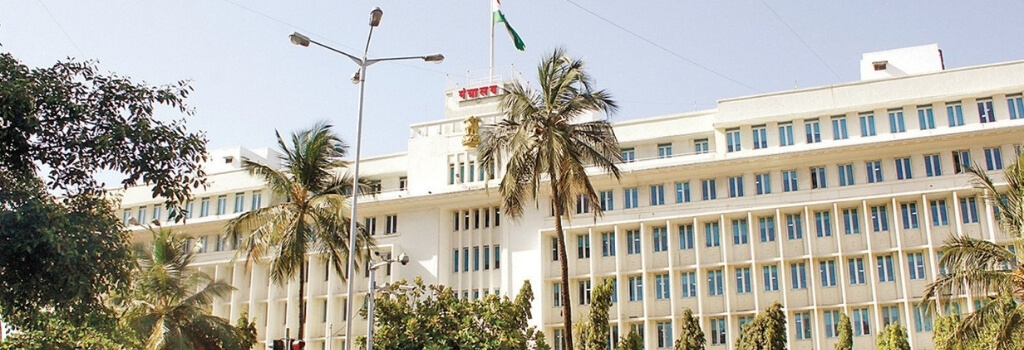 Maharashtra Public Service Commission is recruitment of Assistant Section Officer,
State Tax Inspector, and Sub-Inspector posts. The vacancies will be filled through the
MPSC Non-gazetted Group B Combined Preliminary Examination.
Maharashtra Public Service Commission is recruitment of Assistant Section Officer,
State Tax Inspector, and Sub-Inspector posts. The vacancies will be filled through the
MPSC Non-gazetted Group B Combined Preliminary Examination.
- Recruitment Stages
- Preliminary Examination
- Mains Examination
- Interviews
- Criteria
- All posts: Applicants must possess a relevant degree from a recognized university or institution. Refer to the official notification for more information.
- Age Limit
- ASO and STI posts: 18 to 38 years
- PSI post: 19 to 31 years
 UPSC recruits the candidates for Indian Administrative Services (IAS), Indian Police
Services (IPS) and Central Civil Services including the Indian Foreign Services
through this exam. All the ministries and the departments in the union and state
governments are headed by the IAS officers. Hence the IAS exam has acquired this
much importance. The topper of the IAS exam has the opportunity to become the
Cabinet Secretary to the Government of India. It is the highest bureaucratic position
one person can have in India.
UPSC recruits the candidates for Indian Administrative Services (IAS), Indian Police
Services (IPS) and Central Civil Services including the Indian Foreign Services
through this exam. All the ministries and the departments in the union and state
governments are headed by the IAS officers. Hence the IAS exam has acquired this
much importance. The topper of the IAS exam has the opportunity to become the
Cabinet Secretary to the Government of India. It is the highest bureaucratic position
one person can have in India.
- Nationality
For Indian Administrative Service (IAS) and Indian Police Service (IPS), a candidate must be a citizen of India. For all other services, a candidate can either be a citizen of India or
- A subject of Nepal/ Bhutan
- A Tibetan refugee who came over to India before January 1, 1962 with the intention of permanently settling in India
- A person of Indian origin who has migrated from Pakistan, Burma, Sri Lanka, East African countries of Kenya, Uganda, the United Republic of Tanzania, Zambia, Malawi, Zaire, Ethiopia and Vietnam with the intention of permanently settling in India
- Age Limit for IAS Exam
- Candidate must be minimum 21 years and maximum 32 years of age.
- Educational Qualification
- Candidates must hold a graduation degree in any stream from any university established under the act passed by the Parliament of India or State legislature.
 The national transporter, Indian Railways, is the biggest recruiter in the country. Every year Indian Railways announce lakhs of jobs for graduates, 10+2 and matric pass candidates. Against the vacancies, the Railways receive crores of application forms. The recruitments of the railways are handled by the Railway Recruitment Boards (RRBs) and Railway Recruitment Cells (RRCs).
Toppers
© Copyright Prof. Nancy's Divine Academy
Designed by Canwhart Digital